Technical plastic machining: materials processed by FAHRNER Industries
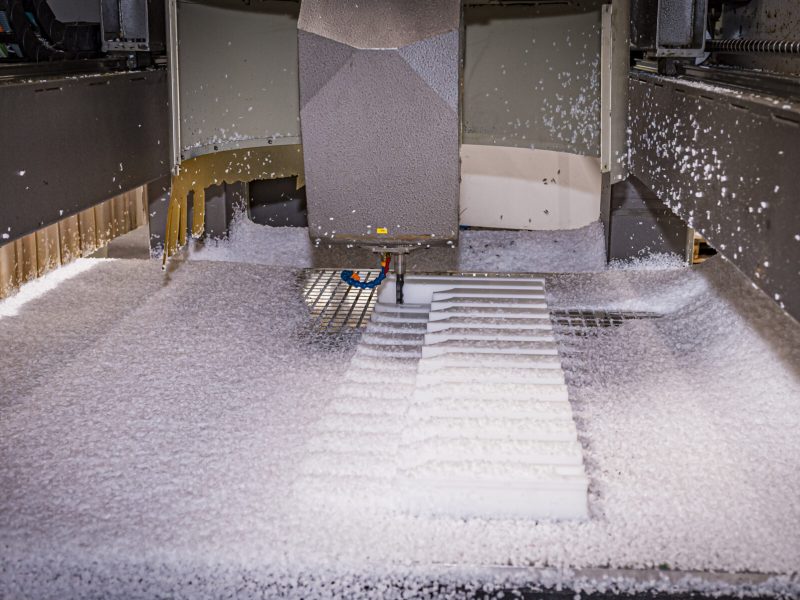
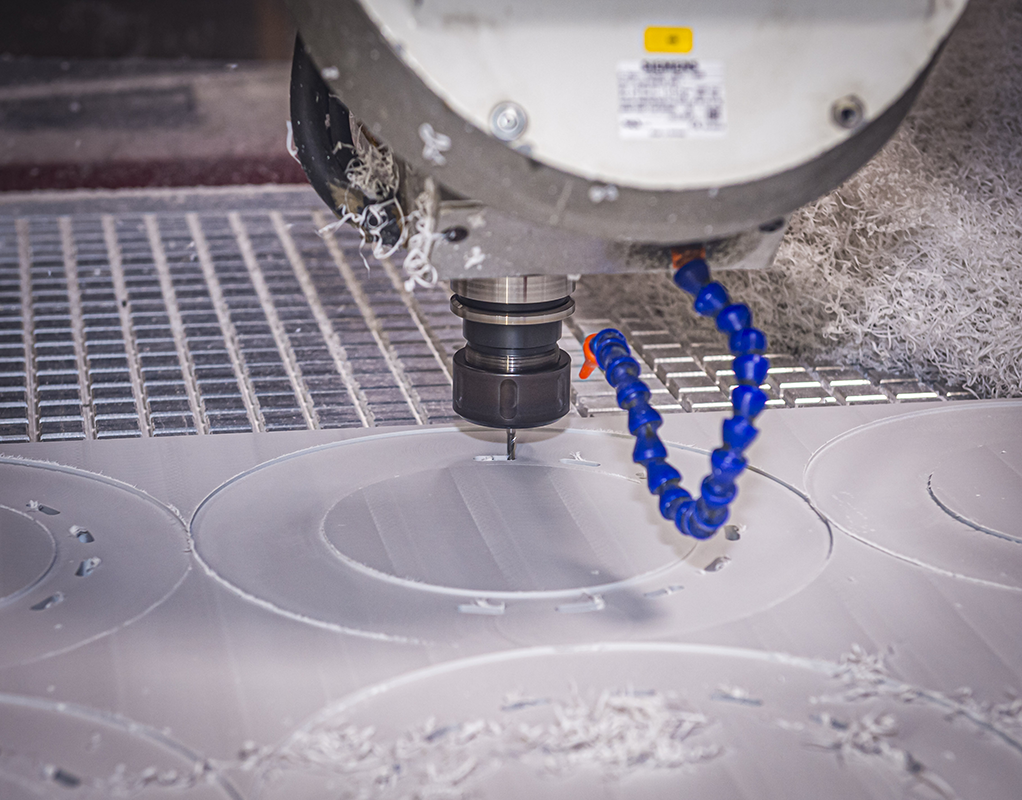
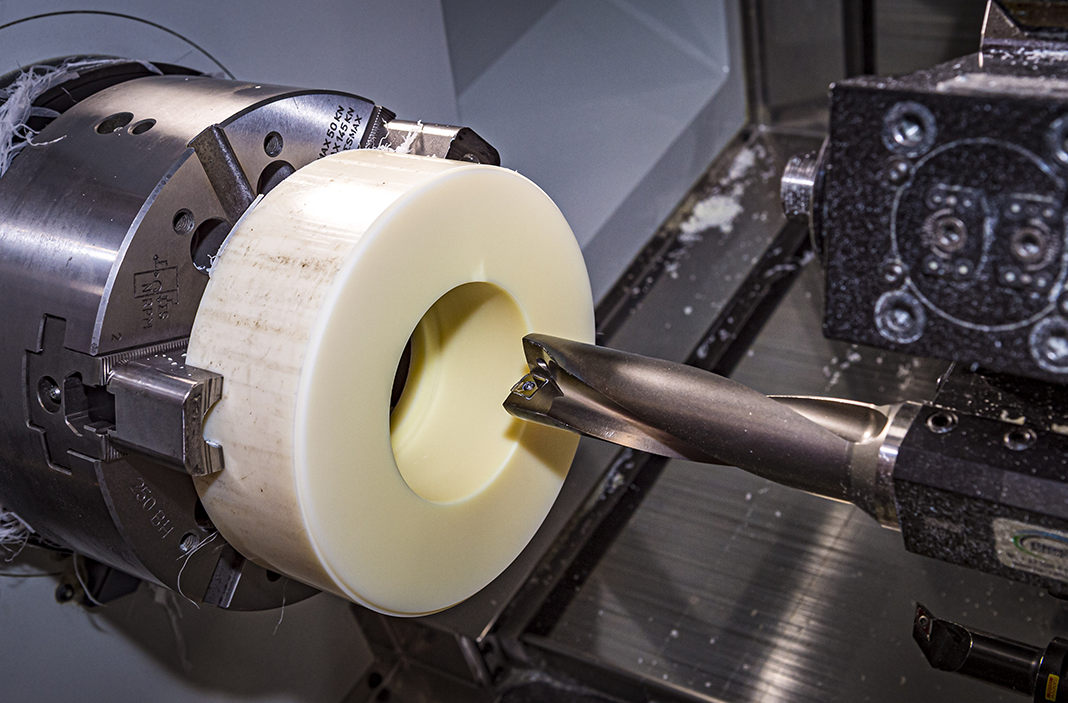
Machining technical plastics demands far more than mechanical precision: material selection is often just as critical as part geometry. At FAHRNER Industries, we machine the full range of technical thermoplastics using turning, 3-axis milling, and 5-axis milling processes. From common polymers such as PA6 and HDPE to high-performance materials like PEEK, every machinable plastic has its own mechanical, thermal, and chemical properties, which must precisely match the operating conditions of the finished part.
Why material selection is critical in plastic machining
In custom plastic machining, material selection is the result of a thorough analysis. An over-specified material drives up unnecessary costs; an under-dimensioned one leads to premature failure. The key criteria include:
- Mechanical strength: stiffness, friction resistance, and wear resistance
- Thermal performance: continuous service temperature and resistance to thermal peaks
- Machinability: dimensional stability, risk of deformation or shrinkage during milling or turning
- Chemical resistance: acids, bases, solvents, oils, UV exposure, humidity
- Regulatory requirements: food contact (FDA, EU regulation), medical compatibility, ATEX certifications
- Material cost: from economical polypropylene to high-performance PEEK
Our teams are available to advise you on material selection and can intervene upstream if the material specified in your requirements warrants discussion.
Our machinable technical plastics: a complete overview
PA6 / PA66 (Polyamide): Mechanical strength and lightweight performance
Properties: Polyamide is a semi-crystalline thermoplastic renowned for its excellent strength-to-weight ratio. PA6 stands out for its flexibility and impact resistance, while PA66 offers greater rigidity and better thermal performance. Both grades absorb ambient moisture, which must be taken into account from the design stage.
Service temperatures:
- PA6: −40°C to +120°C
- PA66: −40°C to +130°C
Advantages: Excellent strength-to-weight ratio, very good wear and impact resistance, low friction coefficient, resistance to common oils and greases.
Limits: Moisture absorption causing dimensional variation; sensitivity to strong acids.
Typical machining applications: distribution components, pulleys, rollers, sliding pads, bearings, chain and belt guide profiles, insulating soles, insulating sleeves.
HDPE (High-Density Polyethylene): Chemical inertness and food-grade compliance
Properties: HDPE is a lightweight semi-crystalline thermoplastic valued for its excellent chemical inertness, ease of machining, and compliance with food-contact regulations. We also offer this material in a 100% recycled version.
Service temperature: −100°C to +80°C
Advantages: Broad chemical resistance (acids, bases, solvents), certified food-contact compliance, low friction, 100% recycled option available.
Limits: Low mechanical performance at elevated temperatures; UV-sensitive without appropriate stabilisation.
Typical machining applications: load-spreading plates, chocking pads, insulating soles, guide profiles, distribution components, dock fenders, scrapers, oil-drilling components.
ABS (Acrylonitrile Butadiene Styrene): rigidity and surface quality
Properties: ABS is an amorphous thermoplastic combining rigidity, impact resistance, and excellent surface finish. It is one of the most widely used plastics for aesthetic parts or components intended for painting, chrome plating, or metallisation.
Service temperature: −20°C to +80°C
Advantages: Good impact resistance even at low temperatures, naturally glossy finish, good rigidity/toughness balance.
Limits: Sensitive to aromatic solvents and ketones; limited thermal resistance.
Typical machining applications: electronic housings, device enclosures, prototypes, interior trim panels.
POM (Polyoxymethylene / Acetal): dimensional precision and low friction
Properties: POM is a semi-crystalline thermoplastic recognised for its very high dimensional accuracy, rigidity, and wear resistance. It is an advantageous substitute for metals in parts requiring tight tolerances, including thin-wall sections.
Service temperature: −40°C to +100°C
Advantages: Very low friction coefficient, excellent dimensional stability, high surface hardness.
Limits: Sensitive to strong acids and concentrated bases; poor UV resistance outdoors.
Typical machining applications: precision gears, slides, distribution components, Archimedes screws, chain and belt guides, electrical insulation components.
PET / PETG (Polyethylene Terephthalate): rigidity and chemical barrier
Properties: PET is an opaque semi-crystalline plastic enabling high-precision parts with strong chemical and mechanical resistance. PETG, a modified amorphous variant, is more transparent, more flexible, and easier to process. Both offer excellent chemical resistance and very low moisture absorption.
Service temperature (PETG): −20°C to +80°C
Advantages: Excellent gas barrier properties (O₂, CO₂), high mechanical rigidity, good chemical resistance, very low moisture absorption.
Limits: Impact-sensitive in amorphous state; not suitable for contact with media containing more than 50% alcohol.
Typical machining applications: distribution components, sliding pads, pulleys, scrapers, combs, protective covers, sight glasses, tool holders.
PP (Polypropylene): lightweight, chemical inertness, and cost-fffectiveness
Properties: Polypropylene is one of the most widely used thermoplastics. Lightweight, chemically inert, and cost-effective, it offers an unrivalled performance-to-cost ratio for a wide range of industrial and food-industry applications, particularly for machined parts in the agri-food sector.
Service temperature: −10°C to +100°C
Advantages: Low density, excellent chemical resistance, food-contact compatibility.
Limits: Sensitivity to impacts and cold temperatures.
Typical machining applications: dairy processing dividers, hopper linings, oil-drilling components, cutting pads.
PVC (Polyvinyl Chloride): flame resistance and versatility
Properties: PVC is available in rigid form (PVC-U) for structural applications and plasticised form (PVC-P) for flexible uses. Its inherent flame resistance makes it a preferred choice for electrical, construction, and industrial applications.
Service temperature: −15°C to +60°C (flexible) · up to +65°C (rigid)
Advantages: Excellent long-term durability, impact resistance, good chemical resistance to dilute acids and bases, flame retardancy, wide range of hardness grades.
Limits: Progressive yellowing over time.
Typical machining applications: display stands, electrical enclosures, insulating components, interior parts.
PEEK (Polyether Ether Ketone): the reference material for extreme environments
Properties: PEEK is a high-performance engineering plastic combining all the properties required for the most demanding industrial applications. At FAHRNER Industries, we machine PEEK for high-precision parts subjected to elevated temperatures where zero deformation in service can be tolerated.
Service temperature: −60°C to +250°C continuous service · peaks up to +300°C
Advantages: Exceptional thermal resistance and stability, near-universal chemical resistance (solvents, acids, bases), excellent sliding properties, outstanding dimensional stability.
Limits: Very high material cost; machining requires specialist expertise and dedicated tooling.
Typical machining applications: distribution stars, combs, pulleys, vibrating plates, insulating bushings, oil-drilling components.
PC (Polycarbonate): optical transparency and impact resistance
Properties: Polycarbonate is an amorphous thermoplastic combining high optical transparency with one of the best impact resistance ratings on the market. It is used for safety glazing, protective guarding, and enclosure applications.
Service temperature: −100°C to +125°C
Advantages: Exceptional impact resistance (safety glazing, ballistic protection), very high optical clarity, good dimensional stability.
Limits: Sensitive to solvents and surface scratching; progressive UV yellowing without treatment.
Typical machining applications: safety glazing, protective screens, goggles and visors, headlamp optics, light diffusers, machine guards.

How to select the right material for your machined plastic part
There is no universal material in plastic machining. The right choice is the result of a multi-criteria analysis. Here is the approach we apply with our customers:
- Define the operating environment: continuous and peak service temperature, presence of chemical agents, exposure to moisture or UV, static and dynamic mechanical loads. These parameters directly determine which materials are viable.
- Establish functional requirements: stiffness, wear resistance, friction coefficient, dimensional tolerances, expected service life. A sliding component has very different constraints from a structural part.
- Incorporate regulatory constraints: food contact, medical compatibility, UL94 standard, recyclability… These requirements may impose a certified grade or restrict available options.
- Balance cost: PEEK and PA66 are not justified for a simple structural component. PP is not suited to high mechanical loads. The objective is to use the most appropriate material, not the highest-performing one in absolute terms.
- Adapt machining parameters: some materials require specific precautions, such as adjusted cutting speeds or deformation management. Our technical team integrates these parameters from the feasibility analysis stage.
FAHRNER Industries: Your specialist partner in technical plastic machining
ISO 9001 certified, we work across all of these platics materials, and many others, to produce your technical plastic parts to the tightest tolerances, from one-off components to recurring production runs. We ensure full material traceability for every batch and provide certificates of conformity on request.
Do you have a plastic machining project? Contact us to request a quote or material recommendation tailored to your application. → info@fahrner-industries.com